March 31, 2007
In which we give credit where it is due
I don't really use tivo anymore, what with not being at home, with the troublesome problems of distributing media from the tivo to other devices, and also because sites such as Throw Away Your TV, YouTube, and the like make accessing clips and content quite straightforward. To get from a tune wedgie to the Safety Dance was but the work of an instant.
And the video has a "little man". Excellent.
March 30, 2007
In which we wonder about swimming across Lake Baikal in woolen bathing gear
The Google Maps application gets more environmentally-friendly, as these directions for getting from
Chicago to London indicate.
I did not know that a swim across the Atlantic was in any way feasible. I always figured the Strait of Gibraltar, the English Channel, or even the Alcatraz-to-Aquatic-Park to be boundaries of human effort. Benoit Lecomte swam from Cape Cod to Quiberon, France:
"Navigated through the 40th and 50th latitude by two French sailors on a 12m (40 foot) sailboat and protected by an electronic force field, Lecomte swam 6 to 8 hours a day at two-hour intervals. He mainly used the crawl stroke, switching occasionally to a mono fin and using an undulating dolphin kick to carry him over the 5 600km (3 736 nautical miles) of relentless waves. 72 days later, on 28 September, he swam ashore exhausted but heroic at Quiberon, France.
"Lecomte probably could not have done it without the modern techniques and clothing that have helped athletes reach astonishing levels of performance. The latest swimming costumes reduce drag resistance by 8%, resulting in a performance that is even better than when swimming naked. Consider that when Captain Matthew Webb became the first person to swim the English Channel in 1875, his waterlogged woollen swimwear weighed about 3kg (lOlb). By contrast, the new Speedo one-piece weighs just a few ounces, even when soaked."
March 29, 2007
In which we wonder about the combination
You got any of that beer that has candy floating in it? You know, skittlebrau. To celebrate the arrival of The Simpsons movie, some 7-11 convenience stores will dress up as Kwik-E-Mart shops.
March 28, 2007
On the geometry of (outer) space
Hexagons in space, such as these captured by the Cassini mission to Saturn, may come from vortices of liquid swirling under pressure; the resulting instability produces a regular polygon.

March 27, 2007
haptic
haptic: of or relating to or proceeding from the sense of touch, from the fantastic and ancient Greek root, haptesthai, "grasp, touch". It commonly refers to the science of applying touch (tactile) sensation and control to interaction with computer applications.
In which we blog too late to save a drowning which
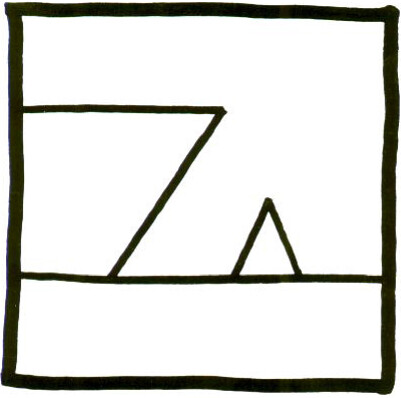
One of my favourite images is the deceptively simple illustration on the cover of Frank Zappa's album "Ship Arriving Too Late To Save A Drowning Witch". A few months ago, Aram described how the image is not unique to this album, but one of a series of Droodles, the brainchild of a comedian, not a cognitive scientist. Roger Price also created Mad Libs, thereby providing me with endless fun for very little effort. Just the thought of this image gives me a fit of giggles.
Is micro-blogging a term? Twitter fascinates me with its strict limit on length of entries (140 characters, the multiple input methods (text-message, IM (!!), and web form) facilitate addiction^W stickiness, and the cosy UI make watching others' activities fun.
March 26, 2007
cerumen
My expensive classical education came to naught, again, as I failed to recognise the root for this year's winning word in the Chronicle Spelling Bee: cerumen, which comes from the Latin cera, for "wax", not serum, "watery fluid". The brownish yellow, waxy secretion of the ceruminous glands of the external auditory meatus, or earwax.
March 25, 2007
In which we have no independence
The San Francisco Chronicle ran a story on the survival of some few independent record shops in the Bay Area, with only the briefest mention of Down Home Music in El Cerrito (with its new neighbour, Berkeley exile Mod Lang). I am still recovering from the sudden closure of my local shop, Open Mind Music.
Village Music in Mill Valley will go out with a bang: "In the meantime, Village Music will get a bang-up goodbye. [Elvis] Costello has agreed to perform in the store sometime in May, and DJ Shadow (Marin resident Josh Davis) has designs on playing every day in September until the doors close for good."
The struggle to remain open reminds me of all the book stores that have shuttered in recent years. When I moved to the Bay Area ten years ago, I printed out a forty-page listing (from the Internet!) of local booksellers, and started visiting each of them as often as I could, weeding out the shops that did not interest me (Rex Stout first editions, Greek texts and scholarly commentaries, contemporary American fiction). Now that list might be a fifth as long, and hardly as interesting. Similarly for the record shops.
Hell
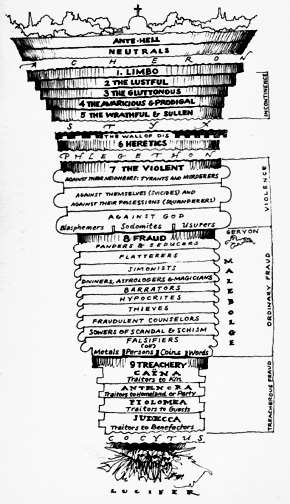
I picked up a paperback edition of Dorothy L. Sayers' translation, with notes, of Dante's Inferno. In her Introduction, Sayers laments that the book requires an introduction at all, or the notes necessary to acquaint the modern reader (this was just before the second Great War) with Dante's personal voyage, his literary allusions, and the politics of his time).
I cannot make my way through Dante, even after reading a half-dozen editions in both English and Italian, without good notes. I always forget which Pope he is mocking, or which small-minded politicians he takes a jab at. I enjoy the rhythm and beauty of the poetry most when I am paying attention to the words as much as the larger meaning of the text, usually when reading in the original.
Aside: The irony of purchasing books from Cody's, an independent book-seller, with my corporate bookstore (amazon, that is) credit-card, was not lost on me.
March 24, 2007
The Tintin Companion
While reading through the first two volumes in the lovingly-produced Hergé Archives, Tintin in The Soviet Union and Tintin in the Congo, I decided to read through The Tintin Companion. I found myself richly rewarded: I had never realised the extent to which Hergé's original black-and-white comics (dessins) and the subsequent colour publications in French reflected the political topics of their day. The politics remain, however, in The Blue Lotus, published for the first time in English following Hergé's death in 1983: the plot closely follows the Japanese exploits in Manchuria, and the occupation of Shanghai, and the subsequent dissolution of the League of Nations. Publishers requested Hergé to make his settings more anonymous: the made-up nation of Khemed, a substitute for Saudi Arabia complete with the dynastic ruler, Emir Ben Kalish Ezab.
I have written before about what a tremendous influence the Tintin books are especially on my vocabulary and knowledge of places.
Tintin in the Congo is available in colour in the original French, as well as several other European languages; as far as I know, the colour edition is not available in English. The black-and-white portfolios feature an excellent translation by the team of Leslie Lonsdale-Cooper and Michael Turner, and almost exactly the same plot. Tintin in the Soviet Union, the first full adventure with our hero the reporter, shows quite clearly that the author had not found his voice: the plot is full of stereotypes, has Tintin constantly finding himself in impossible situations, and has crude ideas about other countries (Hergé had not, at this time, visited the Soviet Union). Similarly, the adventures in The Congo is full of racial and class stereotypes, some of which disappeared during the transition from black-and-white to colour; one cannot blame the author for working within the national and ethnic stereotypes of the day, nor can one laud him for paying attention to detail. The Tintin Companion shows the depths to which he eventually goes in obtaining excellent detail about the people, settings, and ideas for his subsequent books; even The Blue Lotus, which has some terrible language (mostly spoken by Americans!) about the native Shanghai population, shows more sensitivity towards character development.
March 23, 2007
vir1

Thanks to archive.org, you can see my web site from ten-plus years ago. Roffle.
In which we have a Manhattan murder mystery
Through the vibrant and nostalgic world of subways and pay-telephones, Canal Street Station, a pay-phone murder mystery, begins with a call placed from a subway station (the web site notes that "This mystery takes place on the NQRW, 6, and JMZ platforms, NOT THE A C E Station.").
March 22, 2007
In which San Francisco's transit agency goes progressive
MUNI on "Take Your Daughter to Work Day":
I cannot believe this is any sort of date, but, as the man said: "It takes all kinds". Yes. That's what it takes.

March 21, 2007
In which the N is near
The optimistic folk at the N-Judah Chronicles are selling their witty t-shirt, ha ha ha ha. I do like a cheap pun. In other MUNI news, I overheard one young woman telling another that "MUNI downtown is now free. It's a fare-free zone, from Van Ness." The other woman did not know about this development, perhaps because it's not true. The Mayor is again making noise about making MUNI fare-free, while blithely ignoring the related woes of the MTA. This happens more-or-less annually, whenever the Mayor needs to distract from the city's general budget morass. Last year, cable cars were the whipping boy.
The Chronicle had a surprisingly insightful analysis of fare-free initiatives in the US, including Portland's Fareless Square. The lowdown: "The experience of other transit agencies has shown that the ridership would go up -- a benefit if the goal is to get people out of their cars. But that creates a need for more buses and streetcars and additional maintenance crews, drivers and security workers." One, ironic aspect of this change for MUNI would certainly be that the on-time arrival and speed of buses would need to increase, thus making the service actually appealing. ... And an appealing service would be worth charging for. But since San Francisco cannot really afford to make MUNI free, this is pretty much an "academic" argument. And those women on the bus, well, they will just keep on fare-dodging, as do thousands of riders each day.
March 20, 2007
In which Nature treats us

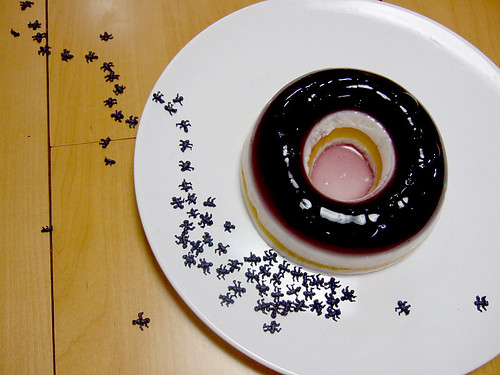
I know donuts, and this is snow donut. Dough snownuts? Government-documented, even.
It's the same principle as making a snowman, except it's nature doing the rolling. And it doesn't happen often, says Paul Pastelok, an AccuWeather meteorologist in State College, Pa.
"The snow has to be fresh and moist enough to be cohesive but not as moist as the snow we had Monday. There has to be a wind strong enough to get the snow rolling (40 mph sustained ...), but not so strong it blows it away. And there has to be a slope, at least initially, for momentum." -- from the Cincinnati Enquirer.
March 19, 2007
In which we skip the Forever part
As US postal rates increase, the Postal Service has plans to issue a "Forever Stamp" to allow customers to hedge against future franking costs.
I know that, from the number of yellowing, adhesive-backed F, G, and H stamps in crystalline envelopes at home, that I rarely keep postage for long enough to make use of a Forever Stamp. Nor do I want to make what is effectively a loan to the Postal Service. I also recall the frustration I felt at the last rate increase, when the Los Angeles post office I went to did not have the new post-card stamps, not the 2¢ (or was it 3¢?) stamps needed to make up the difference from the old to the new rates.