October 22, 2005
Mandela Parkway and 14th
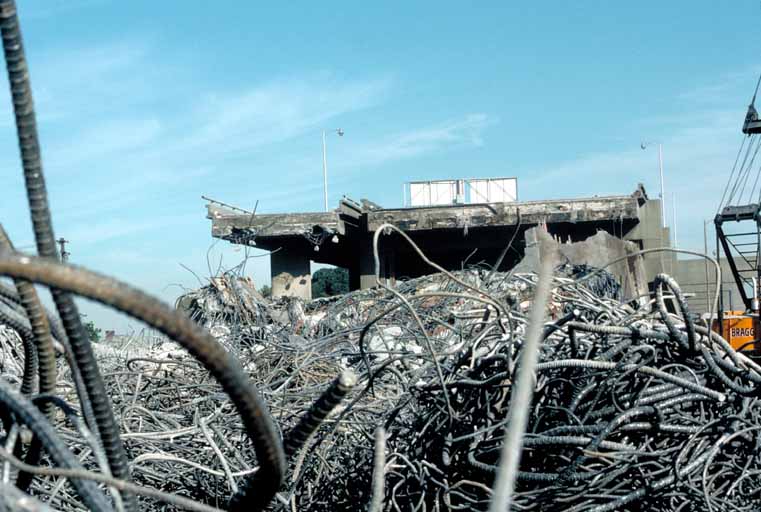
A West Oakland park commemorates the 1989 Loma Prieta earthquake and the fallen Cypress Parkway in West Oakland.

October 21, 2005
In which we are not quite east of the ryan
Or, In which we party like it's 1996
At last night's Daniel Tortois show at the Independent, the two records to which I listened the most in 1996, "Millions Now Living Will Never Die" by Tortoise and "Wrecking Ball" by Emmylou Harris, came together. I never imagined that I would hear Johnny Machine and Doug McCombs performing a heartbreaking song by Emmylou! The Tortoise hour of the set was surprisingly good: these musicians show so much enthusiasm for their instruments (all of them, as each player switches amongst vibes, drums, electronics, guitars, and melodica with each song). They had nice visuals, too, courtesy a 12" Powerbook -- Greg, who who has big news, described them as "organic". They had a nice Rorschach effect, in much the same way that clouds do: I could imagine at one moment a crowd of people in Tokyo, at the next a quiet morning in Washington Square Park.
Aram came back from the merch booth and said, "The guy who made these posters says he drove across country with you." And lo and behold, Lil Tuffy himself was selling the hand-screened gig posters. Indeed, Lil Tuffy and I spent three weeks rolling cross the great US of A, with the Sterns' "Roadfood" as our guide. We saw armadillos on the road in West Texas, stayed up three days straight in New Orleans, and played pool in just about every bar we could find on our lugubrioius route from Pittsburgh to San Francisco.
Daniel Lanois noted that one composition was an homage to Samuel Barber, but without strings. After five or six minutes of quiet noodling, Tortoise launched into a tight lock-groove and Lanois rocked out on the guitar. Lanois ended with a brief encore, in which he played a waltz on the pedal steel.
This was the second night running that I had the a particularly catchy song stuck in my head, both times prompted by drinking in the company of an Australian. The walk home did not clear it, either, so I would up listening to "A Digest Compendium of the Tortoise's World until the wee hours.
October 20, 2005
In which it is Welsh, of course
llanfairpwllgwyngyllgogerychwyrndrobwllllantysiliogogogochuchaf.org.uk lays claim to the World's Longest URL. Charming, wot.
In which violent crime receives a reward
An
OKLAHOMA CITY -- A man got a prison term longer than prosecutors and defense attorneys had agreed to because of Larry Bird.The lawyers reached a plea agreement Tuesday for a 30-year term for a man accused of shooting with an intent to kill and robbery. But Eric James Torpy wanted his prison term to match Bird's jersey number 33.
"He said if he was going to go down, he was going to go down in Larry Bird's jersey," Oklahoma County District Judge Ray Elliott said Wednesday. "We accommodated his request and he was just as happy as he could be.
"I've never seen anything like this in 26 years in the courthouse. But, I know the DA is happy about it."
The approximate annual, amortised cost of housing a prisoner amounts to about $35,000, which means that this filip of judicial imagination will cost the ratepayers another hundred large. Usually sentencing guidelines mean that murderers behind the wheel of an automobile receive light or no jail time for wilfully navigating into a cyclist or pedestrian.
October 19, 2005
In which I love it when a plan(imeter) comes together.
The ACME Laboratories BART map is cool; the Metro map is cooler. As is the planimeter, which gives rise to a miserable play on words.
These do not work in Safari.
In which we can tear the weaving from our loom
Scraps of papyri arrive at Berkeley, and the crocodiles in the Nile are shivering. The Tebtunis Papyri form the largest and most bewildering collection of ancient writings in the US.
Though it took 105 years for the papyri to reach the campus, Berkeley was spared the long anxiety endured by Penelope, Odysseus' long-suffering wife. Berkeley didn't even know the missing material existed until three years ago.Berkeley's papyrologist, Todd Hickey, discovered the materials were stranded on a distant island called Great Britain, where they were being held by a notorious document-hoarding tribe known as Oxford dons.
The bulk of the material -- much of it found in the wrappings of crocodile mummies at the ancient city of Tebtunis -- made its way to Berkeley early last century to form what campus officials say is the largest papyri collection in the Western Hemisphere.
October 18, 2005
In which we cannot teach an old dog new tricks
The San Francisco Examiner captures some neighbourhood discussion of what to do with the former UC Berkeley Extension site at Haight, Laguna, Herman, and Buchanan. I especially like the plan for housing for aging transgendered folk, who "can age in place" according to the developer. Might as well just stick 'em in a pine box, wot? I realise that the turn of phrase is an epithet for having all of the necessary shops, doctors, and community services nearby, but it sounds so horrible. I still have aspirations of spending my golden years on a decrepit cork farm in Portugal, raising chickens and drinking vinho verde.
Plans to develop UC Extension project revamped
By Emily Fancher
Staff Writer
Developers of the historic former UC Berkeley Extension campus in the Lower Haight have agreed to build fewer housing units, make more of them affordable and add senior housing to the mix as part of a revised proposal.
The developers, for-profit AF Evans and nonprofit Mercy Housing California, also responded to neighborhood concerns about their revised proposal by reducing parking, creating more open space, and saving nearly all of a historic building that preservationists had rallied around.
In addition to 337 rental units, the developers are negotiating with Open House, a nonprofit organization, to build roughly 80 units of senior housing for the lesbian, gay, bisexual and transgender community as part of the overall 5.8-acre project at 55 Laguna St.
The site has caused considerable controversy since UC closed its extension campus and announced it wanted to redevelop the site because it could not afford to seismically upgrade the historic buildings and needed to lease the site to support its other extension campuses.
Some neighbors have fought for the property to continue as an educational site and New College has expressed interest in the site.
Patricia Walkup, president of the Hayes Valley Neighborhood Association, said the neighbors remain committed to the site retaining a significant amount of public space. Walkup said the neighborhood anticipates much higher density in the coming decade, making public spaces all the more important — she said recreation, particularly for young people, is needed.
Supervisor Ross Mirkarimi supports retaining the site for public use, and the proposal ultimately needs approval from the Board of Supervisors to rezone it.
But Ruthie Bennett, project manager for AF Evans, said at an event Wednesday that while it “remains no secret people want it to remain an educational use,” UC Berkeley is not considering that option. Bennett said to address the neighborhood’s concerns, the revised proposal does retain an auditorium that will be available for public use.
Walkup praised several aspects of the revamped project, such as the reduction in parking and the potential addition of senior housing by Open House.
Moli Steinert, executive director of Open House, said the nonprofit is still negotiating on the deal.
“There’s nothing final about this,” she said.
She added that the site is attractive because it’s nearby another location where the group is considering building roughly 80 units.
“We’re designing them with supportive services right on site so people can age in place,” Steinert said. “That’s the trend in the future.”
She said the hope is to have perhaps 20 percent affordable units on the UC site, which is near the LGBT Community Center and Market Street transportation.
October 17, 2005
In which we check the record
The Bikes on Transit database has a new home and plenty new features.
The San Francisco County Transportation Authority will hold another public session on the Van Ness Bus Rapid Transit Corridor tomorrow:
( more after the jumpity jump jump )
Thursday,
October 13, 2005
6:00
PM to 8:00 PM
Transportation
Authority Offices
100
Van Ness Avenue, 25th Floor
Tuesday,
October 18, 2005
6:00
PM to 8:00 PM
Holiday
Inn, Crystal Room
1500
Van Ness Avenue
Retaining
and expanding transit's share of travel in San Francisco is a major strategic
challenge for the city as it grows into the future.
Van
Ness Avenue is a key transit spine in the Muni system, with tens of thousands
of travelers using the routes in this corridor daily.
Despite
this, buses to not operate as reliably as is needed for this important
transit spine.
The
City's 2004 Countywide Transportation Plan helps to implement San Francisco's
Transit First Policy by funding cost-effective Bus Rapid Transit (BRT)
treatments on the city's network of Transit Preferential Streets.
BRT means operating rubber-tire vehicles in a way that achieves the speed,
reliability, and comfort of fixed rail.

Typical
BRT improvements include travel lanes for exclusive transit use; wider
sidewalks at bus stops; traffic signal priority for transit vehicles;
full stations with passenger amenities; multi-door boardings at sidewalk-level
platforms; pre-paid boarding areas; and real-time information systems.
The
centerpiece of the 2004 Countywide Transportation Plan is a Network of
Transit Priority corridors, including Bus Rapid Transit service along
Geary Boulevard and Van Ness Avenue.

The
Van Ness Avenue Bus Rapid Transit Study will:
-
Understand transit needs based on travel time, delay, and reliability
studies, safety studies, and community outreach
-
Identify ways to prioritize transit service and raise the level of transit
performance using Bus Rapid Transit treatments
-
Develop a preferred transit treatment and an implementation strategy for
construction in 2008.
The
Authority and City departments have convened an interagency advisory technical
panel, including Caltrans, to oversee and help conduct the study.
Data
collection and analysis conducted as part of this study identified the
following key transit performance concerns on Van Ness:
-
Traveling in mixed traffic causes slow travel times and unreliability
for buses. Transit reliability and speeds will increase if transit is
separated from mixed traffic.
- Reliability and speed problems occur all day. Transit treatments must
be in place all-day to be effective.
- Delays associated with passenger loading and unloading can be reduced,
increasing reliability and reducing the time it takes to make a trip.
- Pedestrian crossing conditions are onerous. A number of basic steps
can be taken to increase pedestrian comfort.
- Much of the transit delay occurs on Van Ness between Mission and Geary.
Treatments should be prioritized in this lower segment.
Improve
Bus Performance Relative to Driving
- Bus travel times are twice as long as auto travel times. Average bus
travel times vary between 18 and 22 minutes, while auto travel times vary
between 10 and 13 minutes.
-
Bus speeds are only 42% to 45% of auto speeds – on average, bus
speeds are less than half of auto speeds. Average auto speeds are between
9 and 12 mph, while average bus speeds are between 5 and 7 mph.
-
Buses spend about half of their time completely stopped. Buses spend an
average of 10 minutes of their travel time in delays, whereas autos only
experience 5 minutes of delay on average.
-
Buses experience twice as many minutes of delay as autos (10 vs. 5 minutes).
Reduce
the Impacts of Mixed Traffic on Buses
- Buses are increasingly off schedule, and increasingly bunched, as they
travel further in mixed traffic.
- Even net of dwell time, buses remain 9 – 35% slower than cars,
reflecting right-lane mixed traffic impacts.
Increase
Reliability and Decrease Travel Time
Travel
time reliability is one of many factors influencing a person's decision
to ride on public transportation, and is the most important factor in
service quality. It refers to how consistent travel times and wait
times are within the corridor.
Travel
by transit on Van Ness is often unreliable due to:
-
Unpredictable wait times for buses. Passengers are just as likely
to wait 2 minutes as they are to wait 10 minutes. 10% of passengers wait
for 12 minutes or longer.
-
Traffic delays
Overall
travel time is greatly affected by transit infrastructure, such as the
type of vehicle and whether buses have signal priority, as well as transit
policy, such as whether proof-of-payment is permitted, allowing passengers
to board through rear doors.
Sources
of travel time delays to transit on Van Ness include:
-
Excess time spent loading and unloading passengers
-
Traffic congestion
Keep
Pedestrians Comfortable
Crossing
Van Ness Avenue is a long and difficult endeavor on foot. BRT alternatives
will be designed to improve comfort and convenience for pedestrians as
well as transit passengers. Crossing Van Ness on foot can be made
easier and more comfortable by installing:
-
Visibly striped crosswalks
-
Pedestrian countdown signals
-
Median refuges
-
Corner bulb-outs to shorten the crossing distance
Provide
Remarkable Urban and Landscape Design
The
study involves an urban and landscape design program to integrate new
transit infrastructure with surrounding workplaces, homes, and businesses.
The corridor includes a number of intersections where key transit
routes intersect, and where high volumes of pedestrians cross. BRT
alternatives will feature quality design treatments and amenities and
these transfer points. Treatments such as pedestrian-scale lighting
can make the street a more comfortable and beautiful place for San Franciscans
and visitors to walk and catch the bus.
October 16, 2005
In which we must move mountains
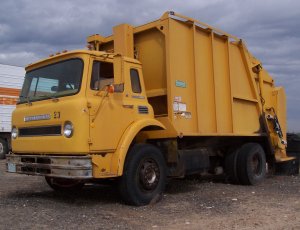
The New York Times has a fascinating report on the solid-waste disposal problem that results from the recent hurricanes: 22 million tons, which may require 3.5 million truckloads to haul it away.
 x 3.5 million
October 16, 2005
The Cleanup
In New Orleans, the Trashman Will Have to Move Mountains
By JENNIFER MEDINA
NEW ORLEANS - On one front lawn, a two-foot-high pile of debris stands where a hedge would normally be. A rusting mattress lies next to a bottle of cleaning fluid and a television set. The stench of paint combined with weeks-old food is choking. Flies hover over the whole thing, zeroing in on a handful of foil-wrapped chocolate eggs.
This is just one pile. There are thousands upon thousands of others, totaling 22 million tons of waste, according to state officials. They have baked in the swampy heat for weeks now, making this city look and smell like a landfill.
It is more trash than any American city produces in a year. It is enough to fill the Empire State Building 40 times over. It will take at least 3.5 million truckloads to haul it away. "It is absolutely and completely revolting," Kathleen McGoey said on a recent day as she stood in front of a mound of Sheetrock, wicker chairs and moldy clothes outside an apartment building she owns.
This is not even counting the cars that have been abandoned on sidewalks, or the boats stranded on the streets. It is not counting the more than 1 million refrigerators, stoves and washing machines on curbs all over the area. This is not counting any of the hundreds of homes that will inevitably be demolished.
It is the largest, and most complicated, cleanup in American history.
More than a month after Hurricane Katrina, the state and the Army Corps of Engineers, which has been assigned to coordinate the effort, have just begun trying to figure out how to sort the blanket of debris. There are probably thousands of tons of household chemicals like bleach and pesticides. There are toxic substances like Freon and mercury.
"What we have looking at us in the face isn't like anything we've seen before," said Jim Pogue, a spokesman for the corps. "We've got to get this out of here as soon as possible." But officials acknowledge that could mean months, if not years.
The corps has already awarded $2 billion in contracts to get rid of the waste in the region - more than three times the annual operating budget of the city of New Orleans. State officials predict that the cost could grow substantially.
There are nearly 3,000 dump trucks that have started to make daily rounds in neighborhoods where residents have moved back in. Much of work is being done now by three major contractors and their subcontractors. The corps is still looking for more trucks to arrive every day.
It will take months to get rid of the muck already clogging streets, and only a fraction of former city residents have returned home so far and have yet to empty out their homes. The Army Corps of Engineers says it is likely to take seven months, while Chuck Carr Brown, the assistant secretary of the Louisiana Environmental Services Office, said the process could take as long as two years.
In some neighborhoods, the rancid piles permeate the air with a smell that seems a mix of sour milk, foul river water and rotting meat. Residents who have returned are complaining about the odor and the accompanying maggots. They wear rubber gloves and face masks to guard their senses and protect their health from bacteria and mold.
As Ms. McGoey spent one recent day cleaning out an apartment in the building she owns, the tenant who lived there spent the afternoon hunched over the balcony, vomiting at least half a dozen times because of the stench. The night before the storm, Ms. McGoey bought several pounds of peppers, now transformed into a pulpy mess at the top of one trash can. "Even if my house is fine, there's no way you could stand to be around this," she said.
There are still five other apartments in the building that must be emptied, but Ms. McGoey says she cannot do that until the garbage she has now is taken away.
"What in the world happens when my neighbors come back?" she asked, looking down the road at other heaps like hers. "I don't have any idea when somebody is going to move this."
Regular trash collection still has not resumed in several parts of the city. In the French Quarter, the odor assaults diners even as they walk out of recently reopened upscale restaurants.
Moving the debris from the streets is just one step. Although officials are urging residents to separate and label their trash, few people have the time or desire to pile their aluminum cans away from their microwaves. Instead, most simply just drag the trash to the curb and leave it to the contractors to sort out the paint thinner from broken telephone poles.
Contractors must then sort the debris at a collection site before the mounds of rubbish will be taken to burn sites, recycling areas or existing landfills within the New Orleans metropolitan area.
The corps is only beginning to make plans for the six categories of waste: green, household, construction, chemical, appliances and vehicles. They have no accurate estimate of how much of the debris fits into each category.
"We'll get rid of the most dangerous stuff first," said Darin Mann, a spokesman for the Louisiana Department of Environmental Quality. "The most difficult part is going to be when people start to realize you have entire homes that are going to be classified as debris."
Much of the natural debris, such as tree trunks, branches and leaves knocked around by the storm, will be turned into wood chips and compost, but some will be burned to prevent termites from spreading. The metal scraps and the tires are expected to be recycled. Most of the remaining debris - including couches, insulation and roof shingles - will be placed in landfills in the area.
"There is a desire to recycle as much as possible, but there is also a strong drive to do this as soon as possible," Mr. Pogue said.
There is no immediate threat of disease, and preliminary tests have shown less soil contamination than many feared. But the soppy, sticky mess has festered for weeks, and local officials worry that residents will be exposed to bacteria, chemical fumes or other toxic substances.
The plans to move forward quickly have drawn some concern from environmental advocates, who say that the pressure to simply get the stuff out could set a dangerous precedent with dumping in local processing sites and landfills.
"We're looking at a place that doesn't have the luxury of segregation that a normal, functioning infrastructure would have," said Allen Hershkowitz, the director of the solid waste research program at the Natural Resources Defense Council. "There may be no alternative now, because there is such an urgent need to make sure that you get this waste away from people, but you've got all this stuff that is never mixed together normally."
If the debris remains mixed in the long term, Dr. Hershkowitz said, there will be public health risks from combustible material, rodent infestation or chemical leaks into the ground. Because so much of the debris was soaked in floodwater for days, there is an even greater concern for the spread of bacteria and mold, he said.
Even in places that suffered little damage from the storm, homeowners have returned to five-week-old food in refrigerators that stopped working the day of the storm. Now, those refrigerators sit curbside, wrapped tightly with tape. In Jefferson Parish, local officials have set up what some call a refrigerator graveyard, where residents can drop off their discarded appliances.
The freezers contain what were once pounds of fresh meat, crab and shrimp - all of it now liquefied and putrid. Many have messages that warn "gross" or "don't touch - stinky food."
But somebody must touch them. The corps has hired contractors to remove the Freon from the appliances so that they can be recycled. Those same contractors are also expected to clean out whatever is inside.
"Right now, our job is just to get this stuff off the streets," said Marnie Winter, the director of the Jefferson Parish Department of Environmental Affairs. "People have so much to worry about, the last thing they want to do is empty their refrigerators."
If the magnitude of it all is too difficult to understand, consider Carneal Knapper's dump deposit slips from one day of hauling debris. There were 10 tons at 9 a.m., and a 9-ton delivery two hours later. By the early afternoon, there were 23 tons and, during his final drop-off at 5 p.m., another 10 tons.
At the end of the day, Mr. Knapper, who works for a subcontractor hauling garbage, returned to his own destroyed home in the Lake Terrace neighborhood. He retrieved a wallet and a box of coins, about the only things he thought were salvageable.
"They're going to have to tear down all this and put it in a dump truck," he said, pointing to his brick home, where floodwater had destroyed everything inside but a wooden dining room table.
He thought about the rolls of sodden carpet he had put in his truck earlier and said: "I'm driving the stuff like this every day, all day. All day, every day."
Copyright 2005 The New York Times Company
In which finding the cross street is a story-problem
The NYC Street Finder contains more complex rules than many spells of legerdemain: "Drop the last figure of the address you are looking to find, divide by 2, and add or subtract according to the chart below. The answer is the nearest numbered cross street. (This formula does not apply to Broadway below 8th Street because of the many streets with names instead of numbers). ... For Riverside Drive, divide house number by 10 and add 72, up to 165 St."