May 29, 2004
Bedbugs and
BALLYHOO
A free show given outside a sideshow to attract a crowd (a 'tip') of potential patrons. Word came into being at the 1893 Columbian Exposition in Chicago. The fakirs, gun spinners and dancing girls from the Middle East that were working at the Streets of Cairo pavilion spoke no English, only Arabic. The interpreters used the expression "Dehalla Hoon" to call performers outside to the show fronts. The Western ears of the pavilion manager, W. O. Taylor, mistook it as 'ballyhoo' and used it when the interpreters were away for lunch. The phrase was picked up by the other showmen working at the fair and was spread throughout the outdoor show business industry.
A-propos of the 1893 Exposition, a few months ago I devoured Erik Larson's wonderfully-written Devil in the White City, the story of a greedy and cruel 'doctor' in the heady days of Chicago's Columbian Exposition. I later lived for two years facing the Midway Plaisance, part of the beautiful areas of Chicago constructed for the Expo.
Heroic and extraordinary

This traversal in the Massif Central of southern France lays claim to the title of tallest bridge. The Millau bridge was constructed by Eiffage and designed by Sir Norman Foster, it stretches 2500m across the Tarn valley; its pillars will reach a height exceeding the 343m of the Eiffel Tower.

May 28, 2004
Written on the walls
... long have I sought to build a site like grafitti.org. Curiously, there's not (yet!) a Walls/US/San Francisco section.


When you come to a fork in the road ...
Reports of larceny in the 'hood abound: this morning we walked in to Coopers and greeted Peter, only to hear the startling story of how his bicycle was parted in five minutes. He arrived to open the shop at 6h10, and locked his 26" BMX -style cruiser to a street sign immediately outside the shop. Eight minutes later he looked up from his preparations and saw that the front wheel, fork, and sundry parts had been stripped off the chromed bike.
Bicycle thieves in this neighbourhood congregate, ironically, in the Duboce Bikeway, between the U.S. Mint and the urban strip mall. Shopping carts full of bike parts litter the narrow path.
Peter said that he accosted a raggamuffin who was loitering nearby; the kid said that yeah, he saw someone around ten minutes ago, he could maybe find out something.
Why a fork? Taking the fork has destroyed the use value of the bicycle -- Peter's transportation -- and will have very low resale value. Goddam junkys.
May 27, 2004
Pirates of the Malaccas
Reading Giles Milton's account of the bloody Spice Wars, Nathaniel's Nutmeg. His loose collection of anecdotes prevents the book from being a strong history, but some of the anecdotes relate very exciting incidents from the struggle amongst the feckless Dutch, cunning Portuguese, and desperate British.
During this time of intrepid, daring, and stupid exploration, the Dutch innvoated map-making technology. Today,
this online mapping tool produces interactive maps (with nearby transit stops marked!) for almost any address in the European Union.
James Lancaster, who inadevertently created the trading triangle between England, Gujarat, and the Spice Islands when he pillaged Portuguese carracks in the Indian Ocean, ran into weather on his return to England:
Even Lancaster felt the end was near. Descending into his cabin, he penned a letter to the Company in London, a letter whose unfailing spirit would become legendary among the sailors of the East India Company. 'I cannot tell where you should looke for me,' he wrote, 'because I live at the devotion of the winds and seas.' And then, sending the letter over to the Hector, he hade her head for England leaving his own ship to her fate. The Hector's captain refused and shadowed the Red Dragon until the storm finally abated. And so, side by side, the ships sailed first to St Helena and then into the English Channel.
When the adventurer Wm. Hawkins arrived in Gujarat to arrange English trading rights, he found strong pro-Portuguese sentiment, backed by Shah Jehangir's official pact with Portugal.
Hawkins was annoyed but placed his trust in tact and diplomacy. He sent a polite but firm letter to the Portuguese command reminding him that their two countries were at peace and asking that 'he release my men and goods, for that we were Englishmen.' The commander was in no mood to be lenient and sent Hawkins a return letter 'vilely abusing His Majesty [King James I] terming him King of Fishermen, and of an island of no import'. Worse still, he described Hawkins as 'a fart for his commision'.
Were the book more well-written (it's not, as the dust jacket claims, a "modern-day Robert Louis Stevenson"), then the story of the lone Englishman, eponymous Nathaniel Courthope, who held off the formidable Dutch for four years, might be more exciting. As two-thirds of the pages lead up to the res, and the connexion between Nathaniel and the treaties is never clearly drawn, the book reads like a second-rate high-school essay. And it lacks commas (which perhaps Adam Gopnik could spare from his best-selling "From Paris to the Moon," which I haven't read; the first sentence put me off horribly).
May 26, 2004
Like Mercator
This online mapping tool produces interactive maps (with nearby transit stops marked!) for almost any address in the European Union.
Library of babel
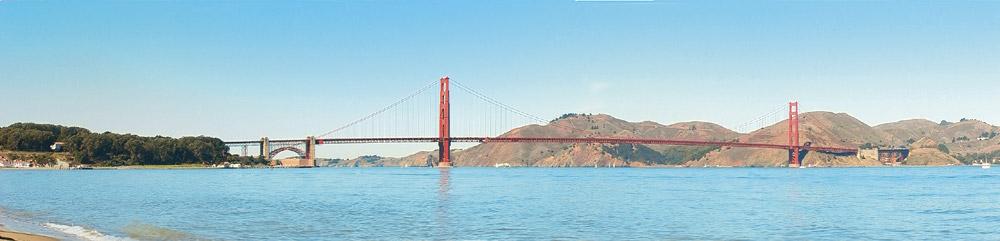
I'm working on a bibliography of books about bridges.
inquotes
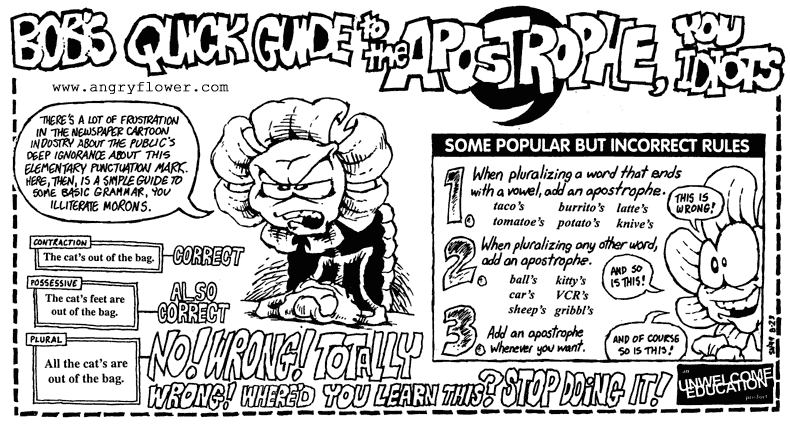
Syntax and semiotics are sciences, and Bob the Angry Flower is our relict, at least when it comes to the inappropriate use of quotation marks, apostrophes, and possessives (or should I write possessive's?).

Spotted this stern warning on a van in Camden Town.
May 25, 2004
Yo fixie!
A commercial for Nike shows Lance Armstrong speeding past a diesel engine, a herd of buffalo, and a pack of San Francisco messengers.
May 24, 2004
Decaying machinery
Photographs of urban decaying mechinery in the sublime Forgotten Substations and Eliza.
May 23, 2004
Errare humanum est
The collapse of the new terminal 2E at Paris' Charles de Gaulle must teach us lessons: we learn from the structural failures more than from our successes.
This is the moral of Henry Petroski's excellent To Engineer is Human, in which he makes this point again and again. We must learn from this mistakes, further our understanding of structures and their failure modes.
Another, more technical book on this same topic is Mario G. Salvadori's Why Buildings Stand Up; of course, when his grandmother saw the book, she said, "It'd be much more interesting to read about why buildings fall down, so he (with Matthys Levy) wrote about that, too.
The Kansas City hotel disaster which figures prominently into Salvadori's and Petroski's writing also forms the plot of Paul Auster's recent Oracle Night.
The tube-obsessed engineers who constructed CdG's new terminal attempted something revolutionary; the unfortunate aspect was that the structure was heavily-used and very public. To construct a tunnel in the open air, without the natural forces of the enclosing ground, is audacious.